Your Denials Already Know Which Claims Need a Second Look: Five Ways to Strengthen Pre-Bill CDI
If a payer’s medical director reviewed the claim tomorrow, would the record support what was billed?
Denials are part of the reality for hospitals, even those with strong coding and CDI programs. Pre-bill CDI helps make sure claims that face scrutiny are supported by a clear, clinically defensible record.
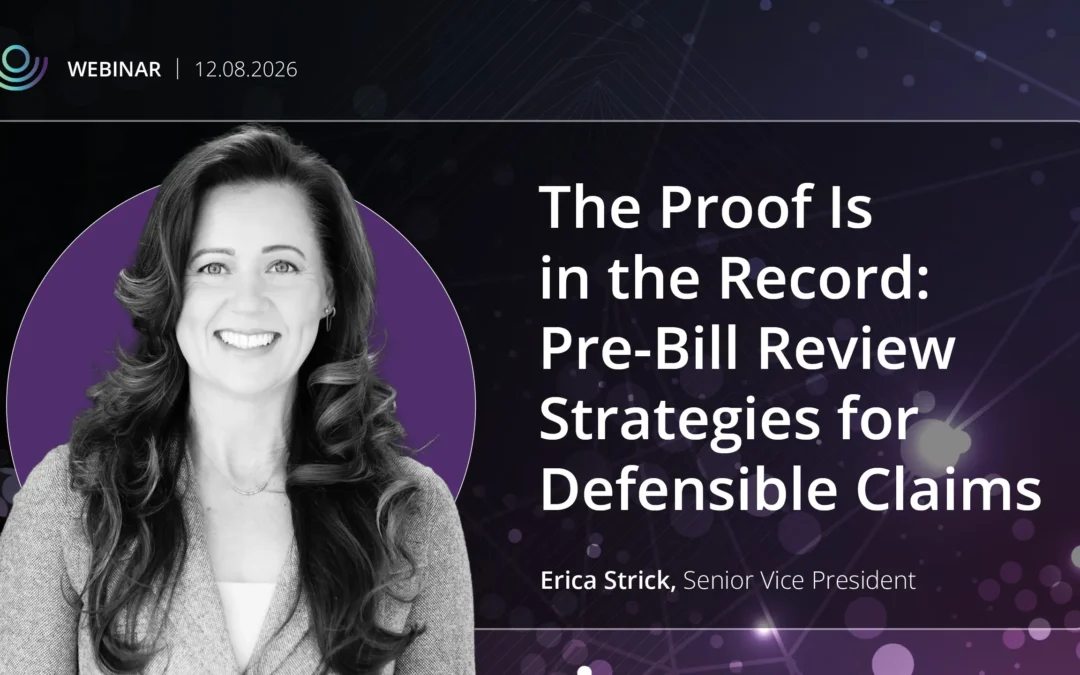
Erica Strick, Senior Vice President of CDI and Clinical Denials at CorroHealth, frames the issue around that question.
Denials history can help hospitals decide where to focus that review. Past denials often reveal which claims are most likely to be challenged, where documentation tends to fall short, and where physicians may need more guidance. Those patterns can also help teams track whether changes to the pre-bill process are reducing claim vulnerability over time. Pre-bill review is not intended to reduce denials volume. As Strick emphasizes, the more relevant question is whether the record is prepared to withstand scrutiny when denials arrive.
Here are five ways to turn that information into a stronger pre-bill CDI strategy.
1. Put Pre-Bill Review in the Right Place
Concurrent CDI takes place while the patient is still in the hospital, at a point when the clinical picture may still be changing. Documentation is still being added and test results may be pending, so a physician’s assessment can evolve before discharge. The final DRG is assigned only after the record is complete.
Pre-bill CDI comes later, after discharge and final coding but before the claim is released.
That timing is critical because this is the first point when the hospital can review essentially the same record the payer will see. It is also the last chance to address documentation gaps or make coding changes before submission.
Strick describes it as a narrow window: the full claim is available, and the hospital still has a chance to act on it. Once the claim is submitted, that window closes.
A clearly defined workflow helps keep the review in the right place: concurrent CDI, discharge, final coding, pre-bill review, claim submission, and payment. It also helps teams focus on meaningful issues without creating unnecessary delays. The pre-bill review should complement, not replace, concurrent CDI, and it should be designed to fit into the existing workflow.
2. Let Denials Patterns Determine What Gets Reviewed
A pre-bill program should not attempt to review every chart. Strick recommends a targeted, risk-based approach rather than a universal review quota. The appropriate volume will depend on an organization’s denials patterns, available reviewer capacity, and the exposure associated with its claims.
The best way to determine which cases belong in that group is to start with actual denials data. High-dollar DRGs deserve attention because the financial exposure per claim can be significant. Diagnoses such as sepsis, acute respiratory failure and malnutrition may also warrant closer review because they are frequent targets for clinical validation. Some service lines produce recurring line-item disputes, while certain payers show consistently aggressive denials behavior.
Strick recommends looking directly at the organization’s denials inventory. Sort prior denials by volume and dollars, then examine patterns by DRG, diagnosis, payer and service line. The cases near the top of that analysis can begin to shape pre-bill selection criteria.
Rules and analytics can sharpen that pre-bill process further, particularly when they account for historical performance. The criteria should also be refreshed as new denials trends emerge. Payer behavior changes, which means a review strategy built around last year’s claim vulnerabilities can quickly lose relevance. Where historical data and machine learning are available, advanced technology can help identify patterns in which payers, DRGs, or documentation characteristics have preceded denials. For example, clinically led AI solutions like VISION Clinical Validation Technology® use historical patterns to surface claims that may be more likely to face payer scrutiny, helping teams focus review resources where exposure is greatest. With pre-bill CDI, the goal is to refine selection over time, not rely indefinitely on a static list.
The strongest programs focus their limited review time on claims where a documentation gap could be costly and hard to fix later.
3. Pressure-Test the Clinical Story Before It Leaves
Pre-bill review also gives hospitals an opportunity to evaluate the clinical defensibility of the coded claim before a payer does.
That requires more than confirming that a diagnosis appears in the chart. The record must contain enough clinical support to defend the code if challenged. For diagnoses such as sepsis or respiratory failure, that may mean clear objective evidence, documented criteria, and a consistent clinical narrative.
Strick emphasizes that payer scrutiny often centers on whether the completed record supports the billed condition. A claim can be coded correctly and still be vulnerable when that support is weak.
A useful standard is to ask whether the team could write a strong appeal tomorrow using only what is in the record today.
If the answer is no, the next step may be a query. A review may also identify a coding opportunity or a condition that should not be represented as currently coded. Any query or coding change should follow the organization’s applicable compliance and documentation processes. That choice can spare the appeals team from spending time defending a position the record could never sustain.
The case can also help prevent the same problem from happening again. Teams can use it to show physicians where the documentation fell short and what would make the record stronger the next time.
4. Feed All Denials Back Into the Pre-Bill Process
A pre-bill program becomes more useful when teams feed denials and appeals back into the process. Otherwise, documentation gaps may not come to light until the appeal stage, when the record is already closed and there is little opportunity to strengthen it. As Strick points out, the appeals team can only work with what has already been documented; it cannot create clinical evidence after the fact. When those gaps are caught before billing, the appeal team is in a much better position to support a complete clinical story rather than piece one together later.
Appealed denials can also show teams where the process needs to improve. Looking back at those cases can reveal gaps that might have been caught before billing and point to changes that could prevent the same issues from happening again. Over time, those lessons can sharpen case selection, strengthen queries and documentation practices, and guide more targeted education for clinicians and CDI specialists.
That education tends to be more meaningful when it is tied to a real case. Showing a physician how a documentation gap weakened an appeal gives the feedback context, while examples of strong documentation that helped overturn denials can reinforce what worked. Over time, those conversations can make education feel more relevant and help change documentation habits.
Teams can then look at measures such as clinical validation query acceptance, physician responsiveness, and changes in behavior over time to see whether those lessons are carrying into future cases. When CDI, coding, denials teams, and physicians continue sharing what they learn, the process becomes more proactive and documentation can improve across the organization. A regular meeting between CDI and denials teams can provide a practical forum to review trends, share payer feedback, and update education and review priorities.
5. Measure What Pre-Bill CDI Actually Changes
Traditional denials metrics only tell part of the story. Hospitals may track denials volume, recovery dollars, and appeal success, but those numbers do not always capture the work that was avoided because documentation was strengthened earlier and a claim never needed the same level of rework.
Pre-bill CDI should not be judged by whether denials volume falls: payer strategy and market behavior influence that number, and the program does not control them. Instead, measure how well the record holds up when denials occur.
To understand whether pre-bill CDI is making a difference, organizations first need a clear baseline. That means knowing where denials tend to occur, which diagnoses or DRGs are most often involved, how appeals are performing, and how much staff time goes into rework. Before implementation, establish the measures you will compare afterward. Strick recommends tracking appeal overturn rate, appeal strength at submission (for example, strong, moderate, or weak), and query acceptance, as well as dollars denied or upheld. Tracking defensibility, such as the share of denied cases in which the documentation is assessed as strong, may also be valuable.
Once that baseline is in place, teams can look for evidence that the record itself is getting stronger. Improvement may show up in better results for certain DRGs or payers, fewer rounds of review, less appeal effort compared with the dollars at stake, or faster payment on high-risk claims. If measures such as review rounds, staff effort, or payment timing are included, treat them as additional operational indicators, not as outcomes, and assess them against a comparable baseline.
Strick also recommends assessing the strength of an appeal at the time it is submitted.
A more useful measure is whether claims are becoming easier to defend and whether teams are spending less time fixing problems after denials occur. Comparing appeal strength and overturn rates across payers can also help distinguish documentation weaknesses from potential payer-specific patterns.
Make the Last Clinical Check Count
Pre-bill CDI gives hospitals one final opportunity to look at the record before the claim goes out and ask whether it will hold up under payer review.
For many organizations, a good place to start is simply making sure that review happens after final coding and before submission. Denials and appeal history can then help teams decide which claims deserve the closest look. Pulling a recent high-risk case can show whether the process is catching the kinds of documentation gaps that have caused problems in the past.
Once a claim is submitted, the record has to speak for itself. Pre-bill CDI helps make sure it can.